Writer: Something You Are, Something You Become, Something You Are Always Becoming
"You can't teach people to write well. Writing well is something God lets you do or declines to let you do." Kurt Vonnegut, Teaching the Unteachable (1967)


These posts by Aaron Gwyn resonated in the context of a recent conversation I had with a first-year writing student:

I am currently teaching two first-year writing (FYW) seminars and one upper-level writing and research course. My FYW students seem exceptionally sharp and engaged in our courses.
One student after class the first week told me they were working on their first horror short story and asked if I had any advice.
Like Gwyn, I immediately suggested the student review their favorite horror short stories and horror writers because a good deal of becoming a fiction writer is using powerful fiction writing as models for developing your own style.
The student said they had never read any horror short stories and didn’t know of any horror writers.
I told them to find some stories and start reading horror writers, then.
Gwyn’s exchange also reminded me of my high school teaching years in the 1980s and 1990s. I linked my literature and writing units so that students read essays when they were learning to write essays; they read poetry when they were asked to write poems; and their short story unit culminated in their writing a short story.
By far the weakest writing of these units was student short stories.
I soon realized that despite our reading short stories using “reading like a writer” strategies and explicitly identifying the stories as models for original stories, student stories were thinly veiled efforts re-imagined from TV shows.
A stunning number of these stories had main characters who were doctors in the ER.
So what I read was a teenager’s interpretation of being a doctor based on how TV shows portrayed doctors.
In short, not good writing.
I, then, do not think today’s young people are somehow uniquely disengaged from what it means to become or be a writer.
There are at least a couple reasons that students (and most people, I think) don’t really understand being a writer.
Pop culture has long badly portrayed writers, or at least portrayed writers in very decontextualized and reductive ways.
From Californication to Pluribus, for example, what viewers mostly see are engaging characters who are writers—without seeing much of anything about how they became writers or how they go about the dramatically boring task of drafting and revising.
These incomplete characterizations are also reinforced by real-world popular writers.
For example, I am a Haruki Murakami fan and occasional scholar.
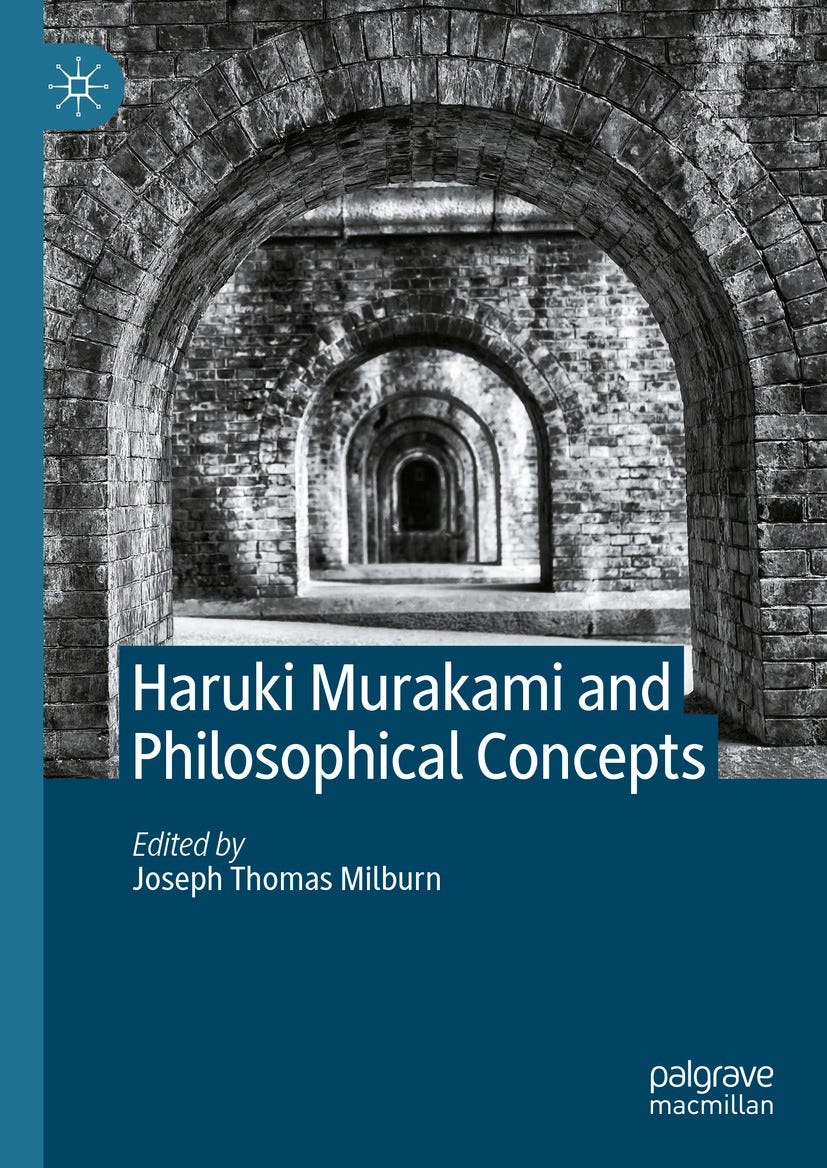
The narrative around Murakami suggests that somewhat late in life, Murakami just decided to become a writer. The story he tells is having an epiphany about becoming a writer while watching a baseball game; he professionally ran a jazz club.
None of that seems literary at all, and also reinforces the idea that being a writer is something about having ideas, having an imagination.
Something someone just announces like Michael Scott declaring bankruptcy.
This quaint story is misleading because Murakami also regularly names the American writers he admires and draws inspiration from (consider how Killing Commendatore draws heavily on The Great Gatsby); although Murakami uses other people to translate his works, he also translates his favorite English writers into Japanese.
What seems missing in examinations of writers is the craft of being a writer. Writing is much more than ideas since that pool is relatively shallow.
As I noted above, pop culture will never spend much time on the reading and craft work needed to be a writer; there is nothing dramatic in that at all.
But another disconnect may be that becoming and being a writer is something of both a calling and a craft.
I vividly recall the day in the spring of my first year of college when I realized I was a writer, although I had written very little, mostly a few poems.
That was the start of a journey because being a writer is something you are, something you become, and something you are always becoming.
And that process includes very much being a reader.
At the core, then, I often think about Kurt Vonnegut, a major American writer who also was a teacher of writing.
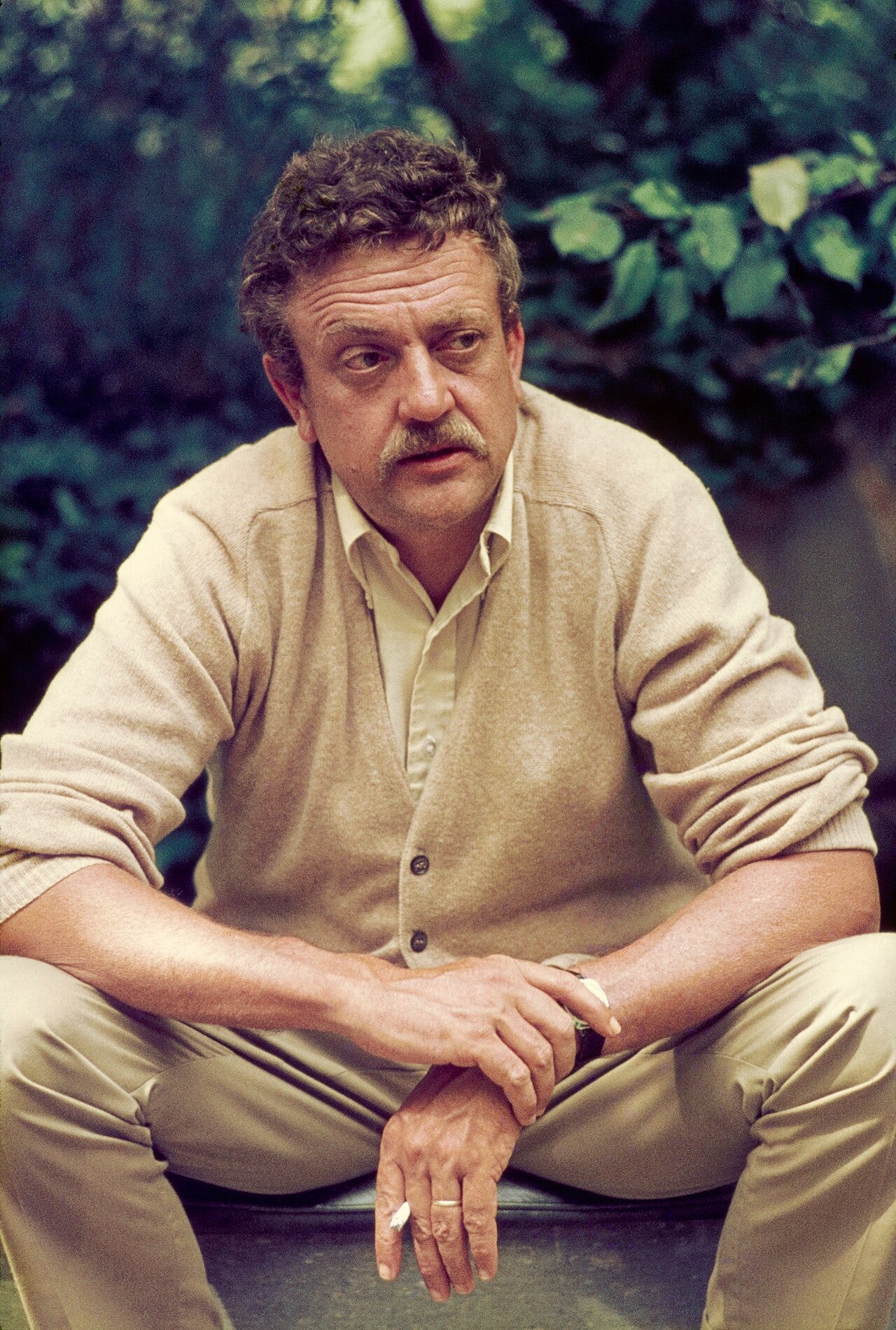
Vonnegut famously declared: “You can’t teach people to write well. Writing well is something God lets you do or declines to let you do.”
As a writer and writing teacher for over 40 years, I suspect there is some hyperbole for effect in Vonnegut’s pronouncement, but there is something true there also.
I certainly can and often do help people write better, and in many cases, write well.
But I am not teaching people to be novelists—possibly something unteachable that paradoxically requires the writer to learn a great deal before being able to do that thing they set out to do.
That said, if being a writer is about text-based writing across a number of genres and forms (as opposed to writing scripts for filmed media, video gaming, or sequential art), then the would-be writer must in fact be a reader.
And then, they must write, read more, and write more.
Not very sexy, and more often than not, not very productive for many people who one day like me came to see themselves as a writer.
If you want to help with the costs of keeping my public work open access and free, please DONATE.