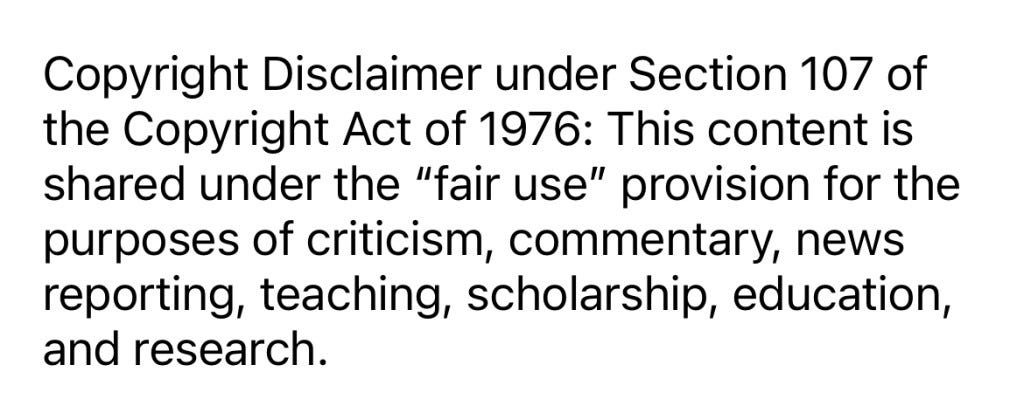
"Smile your on Camera"
"I wish it could be short and simple like some others more widely known, but I want to do more than just urge writers to 'Omit Needless Words' or 'Be Clear.'” Joseph Williams, Style

My journey as a writing teacher included many early years of on-the-job training—and more trial-and-error than I like to admit.
I was a highly effective writing teacher well before I was a good writing teacher.
And I remember the pivotal day when I made that most important transition. That is a tale of two books—the iconic Strunk and White Elements of Style and Style by Joseph Williams.
The day was the first group meeting of my doctoral cohort where the professors in the program introduced themselves and gave an overview of the program. Craig Kridel, who would become a key major professor and mentor, stood up, introduced himself, and told the group that everyone should read Style, holding up the original volume with its distinctive yellow cover.
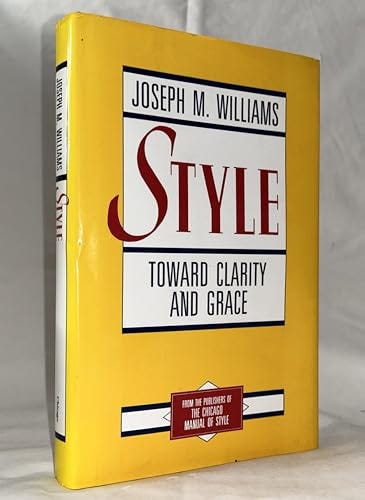
Of course, I bought a copy to read immediately.
The book was wonderful and engaging for me because I love language, but I was jarred by Williams taking powerful swipes at the folly of Elements of Style:
This is a book about writing clearly. I wish it could be short and simple like some others more widely known, but I want to do more than just urge writers to “Omit Needless Words” or “Be Clear.” Telling me to “Be clear” is like telling me to “Hit the ball squarely.” I know that. What I don’t know is how to do it. To explain how to write clearly, I have to go beyond platitudes.
Over the first few years of frantically teaching, I used classroom sets of Strunk and White, and dutifully drilled my students in the Strunk and White pithy rules of writing.
And students learned them.
And students applied them in their writing.
But there were two problems that Williams help me confront.
A great deal of those mandates are, frankly, garbage, and approaching language from a rules perspective is linguistically and ethically misguided.
I was then forced to admit that I had conflicting personas because I knew the linguistic reality expressed by Williams (and believed that), but I performed as a teacher in the reductive and authoritarian ways demanded by Strunk and White.
Like the English language, I changed.
Throughout my most recent 24 years as a college professor, I use Style (although Pearson has bastardized Williams’s original text as a textbook sadly) and work hard to help students have a healthier and more nuanced view of language.
Early in my first-year writing seminar, we read James Baldwin’s If Black English Isn't a Language, Then Tell Me, What Is?, for example, and discuss the power of language but also how some use authoritarian attitudes about language to leverage power over minoritized and marginalized groups.
We acknowledge that language is a status marker while stressing that those status markers are unfair and often simply nonsense (don’t split infinitives, don’t end sentences with prepositions, don’t start sentence with “and” or “but,” don’t use “I”).
Recently on social media, then, I was fascinated by a debate—often heated—over “decimate”:


This is a tired but robust argument between those who want to preserve language and those who (rightfully) acknowledge that language is always changing—even word meanings.
(Interestingly, those fervently arguing “decimate” strictly means reducing by 10 percent do not seem concerned that December is the twelfth and not the tenth month.)
A bit over a week later, I saw a sign after I dropped my partner off at her bouldering gym that reads: “Smile your on Camera.”
Things like this out in the wild are sort of glorious—the use of “your” for “you’re” and the delightful capitalization of “Camera.”
It is haikuesque, in fact.
I took the picture out of delight. I was smiling.
But, I am sure, some immediately judged the sign and the good soul who likely had it printed. Many eyes may have allowed this thing to come to be.
And here I think is the key point: Not a single person misunderstands the pithy warning.
Human language is incredibly resilient to the language police.
We care little, even in print, about those differently spelled words that sound the same because we are all just using these letters to get to meaning.
“Wind” and “dove” in print here cannot be accurately pronounced until we have a sentence for context: The fog allows us to see the wind wind through the valley, or The dove dove from the tree and flew away.
“Raise” and “raze” sound exactly the same, and mean the opposite: To raise a new building means something quite different than to “raze” a building.
Clarity comes in print, not spoken language here.
My first-year writing students just began Style, and in my brief introductory lecture, I mentioned that when I was in junior high and high school, we did grammar/usage lessons on “shall” and “will,” noting that none of them had those lessons.
I then explained that we are all now experiencing another shift; the “who/whom” dilemma for most people is fading away because, alas, while “shall” is dead, “whom” is in hospice.
I also mention that comma usage is decreasing (scan a page written by Hawthorne, for example, and witness commas everywhere, even beside dashes!) and the apostrophe may be visiting “whom” soon.
Language changes and we are fine, maybe even better for it.
“Smile your on Camera.”
grammar Nazis (post-apostrophe literature)

when they came for the apostrophes
its like someone took all the stars
turning the night sky flat black

we were left with isnt and wont
all our its were jumbled
and everyone lost all their possessions

we began to bury dashes in the backyard
lock semicolons in chests in the attic
stuff commas by the handfuls in our pockets

sometimes in the inky darkness of night
exclamation points hidden like knives
under our pillows

we held hands or spooned whispering

itll be alright
they wont win
they wont win

—P.L. Thomas
If you want to help with the costs of keeping my public work open access and free, please DONATE.